Loading page
Extracurriculars by major
Extracurriculars for Physics Majors
A physics application reads best when your activities show genuine curiosity about how the physical world works, then translate that curiosity into measurement, experiment, and eventually something you built or led. These six activities move from a first physics club and Science Olympiad all the way to founding a physics outreach organization or reaching the US Physics Olympiad team.

Explorer
Start here and build momentum

Join physics club and Science Olympiad
A school physics club provides a peer community for talking through concepts and running informal demos or experiments, and many clubs enter regional Science Bowl competitions as well. Science Olympiad's physics-heavy events, including Optics, Sounds of Music, and Experimental Design, teach the measurement and uncertainty analysis skills that undergraduate lab courses assume you already have. Earning a top placement at a regional or state Science Olympiad invitational gives you a concrete competitive result early on.
Find a physics club or Science Olympiad team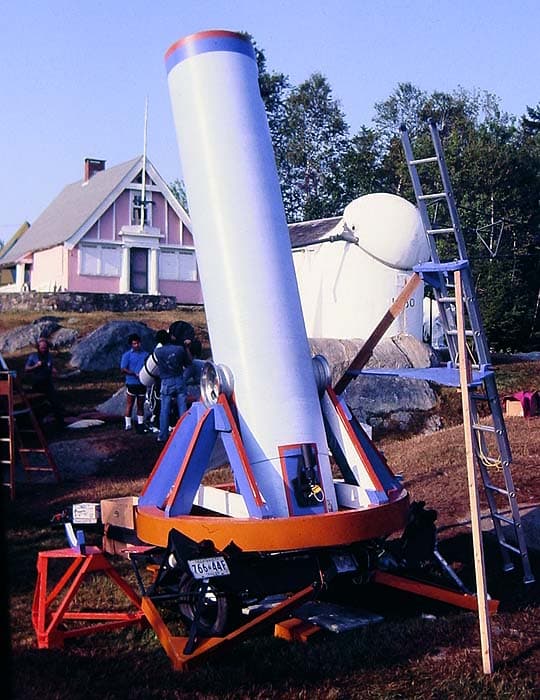
Volunteer for astronomy or physics outreach
Many university astronomy departments and planetariums run public nights where high schoolers can volunteer to operate telescopes, explain celestial objects to visitors, and assist with K-12 school programs. Sustained outreach volunteering over one to two years, especially if you take on a training or coordination role, shows that your interest in physics extends beyond your own learning. It also gives you a genuine service story that reinforces the physics narrative rather than pulling away from it.
Find physics and astronomy programsStrategist
Compete and get noticed
Do research with a physics professor
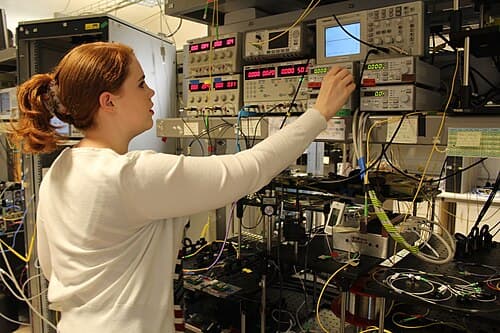
University physics departments have research groups in condensed matter, optics, astrophysics, particle physics, and more, and many PIs welcome motivated high schoolers for summer projects. Email a few faculty whose published work genuinely interests you, reference a specific paper, and propose a concrete contribution rather than an open-ended learning experience. A poster at a departmental research symposium or co-authorship on a preprint is a realistic first outcome from a summer project.
Find physics research programs
Take the F=ma exam and target USAPhO
The F=ma exam is the entry point to the US Physics Olympiad pathway: the top scorers advance to the USAPhO, a two-part exam that selects roughly 20 students for the US Physics Team training camp. The F=ma covers Newtonian mechanics at a depth well beyond AP Physics, so starting preparation in sophomore year gives you time to reach a competitive score. Even qualifying for the USAPhO without advancing to camp is a nationally recognized distinction that physics programs notice.
See the F=ma and USAPhO exam scheduleMythic
Build something exceptional
Found a physics outreach organization or build a real experiment
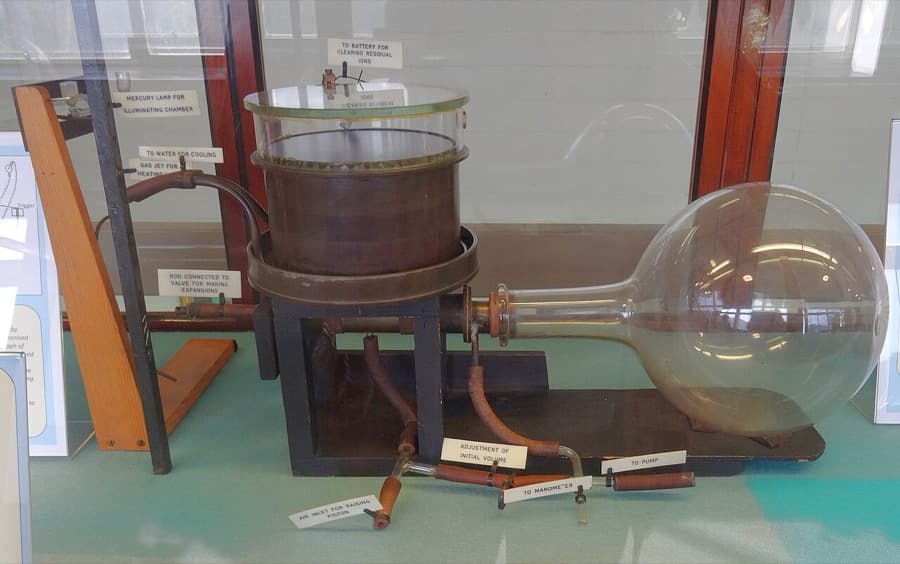
Students who build their own scientific apparatus, whether a cloud chamber, a spectrometer, or a working Geiger counter, and document the design and measurements in a public writeup, demonstrate a hands-on relationship with physics that few applicants can claim. Alternatively, founding a physics outreach program that runs workshops for middle or high school students shows you can turn subject expertise into something that serves others. Both paths require initiative that goes far beyond joining an existing program.
Explore physics program opportunities
Reach the USAPhO camp and target IPhO
Invitation to the US Physics Team training camp means you are among the top 20 physics students in the country at your age. From camp, five students are selected to represent the United States at the International Physics Olympiad. A USAPhO camp invitation, with or without an IPhO spot, is the single most distinctive credential available to a high school physics applicant and is recognized immediately by admissions readers at Caltech, MIT, Princeton, and every other program where physics is taken seriously.
See IPhO results and the USAPhO camp pathQuestions, answered
Extracurriculars for physics majors, explained
What extracurriculars are good for a physics major?
The strongest physics extracurriculars show that you engage with the subject experimentally as well as theoretically. A competition pathway from F=ma through USAPhO, hands-on research with a university professor, Science Olympiad build and measurement events, and eventually something you founded or built independently form a cohesive story. Depth in two or three of these areas is far stronger than broad participation.
Does USAPhO help with college admissions?
Significantly. The F=ma and USAPhO are widely recognized by admissions offices at top physics programs, and qualifying for the national exam round is a concrete benchmark that stands out in a large applicant pool. Camp invitation is an even stronger signal, but the first measurable step, a strong F=ma score, already distinguishes you from the majority of applicants who list AP Physics on their transcript.
Can I get into a top physics program without competitions?
Yes. Research experience is often valued as highly as competition results, and a student with a genuine university research project and a poster or publication has a compelling story even without an olympiad score. The key is showing that your engagement with physics goes beyond coursework: that you have measured something, built something, or taught something related to the subject.
Build your roadmap
Answer four questions and get a personalized plan with activities and opportunities near you.